EN
You don't have to see the whole staircase to take the first step.
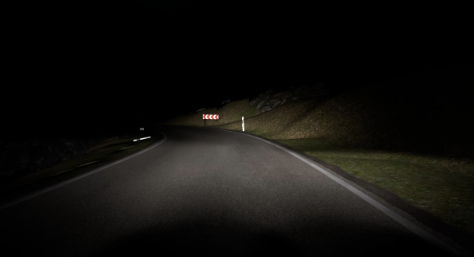
You know the feeling. You’re driving in the dark at night, and the only thing you can see is what your headlights illuminate a few meters ahead. You know your destination.

When we arrived at the beach, my daughter ran straight to the water. Arms outstretched, face toward the horizon. For me, that was the moment the vacation truly began. Her posture represented everything a vacation promises: for a moment, anything is possible, and the world is wide open.
Twenty minutes later, she was lying on a beach chair, looking at me.
"What are we going to do here? How long are we staying? Are we going back to the pool?"
Her little brother had claimed the shovels and buckets. For a moment, she didn't know what to do with herself. And I wondered: why is she bored here, but never at home? Not at school. Not at after-school care.
The playground without a fence
I was reminded of a study on children's behavior on a playground, first without a fence, then with one.
Without the fence, children stayed close to the teacher. Cautious, hesitant, constantly looking for confirmation about what was safe. With a fence, their behavior changed completely. Children spread out, ran to the edges, and used the entire playground.
The fence didn't restrict them. It set them free.
My daughter on that beach experienced the exact opposite. No fence, no structure, no boundaries. Just space. And paradoxically, that made her unsure of what to do for a moment.
The principle of boundaries also applies to organizations
What applies to children on a playground, I see reflected in organizations. Not because people are children, but because the mechanism is the same. Freedom without boundaries is overwhelming. Clarity about the scope of the space actually makes people freer to move.
I see it in teams that say they want more autonomy, but as soon as they have it, they constantly ask for confirmation. Not out of self-doubt, but because it is unclear what the boundaries are. What am I allowed to decide? What is my responsibility? Where is the line?
Without an answer to those questions, people move toward the center. Toward the leader, toward the safety of what they know or have always done.
Boundaries as a prerequisite for ownership
A well-structured OGSM provides that clarity because it establishes the boundaries. Not as a straitjacket, but as the fence around the playground where so much is possible. The Objective provides a clear direction. The Strategies make explicit choices about how to get there. The Measures make it visible whether you are moving in the right direction.
Everything fits on a single A4 page, and that limitation forces clarity. What are we doing? What we are not doing is explicitly excluded. Who is responsible for what?
With that clarity, more space is created. Space for the dialogue that otherwise wouldn't happen. Space to base choices on. Space to take initiative without having to constantly ask if it's right.
My daughter didn't need an activity program on that beach. She needed a little bit of structure to be able to feel the freedom. Soon enough, we were building forts and sandcastles with moats and canals.

Get in touch with us today!